How to Organise Invoice Records Properly
A simple structure for invoice records that stays readable a year later.
Invoicing software · One-time packages · Digital delivery
Why a boring, sequential reference format is the most useful decision you will make.
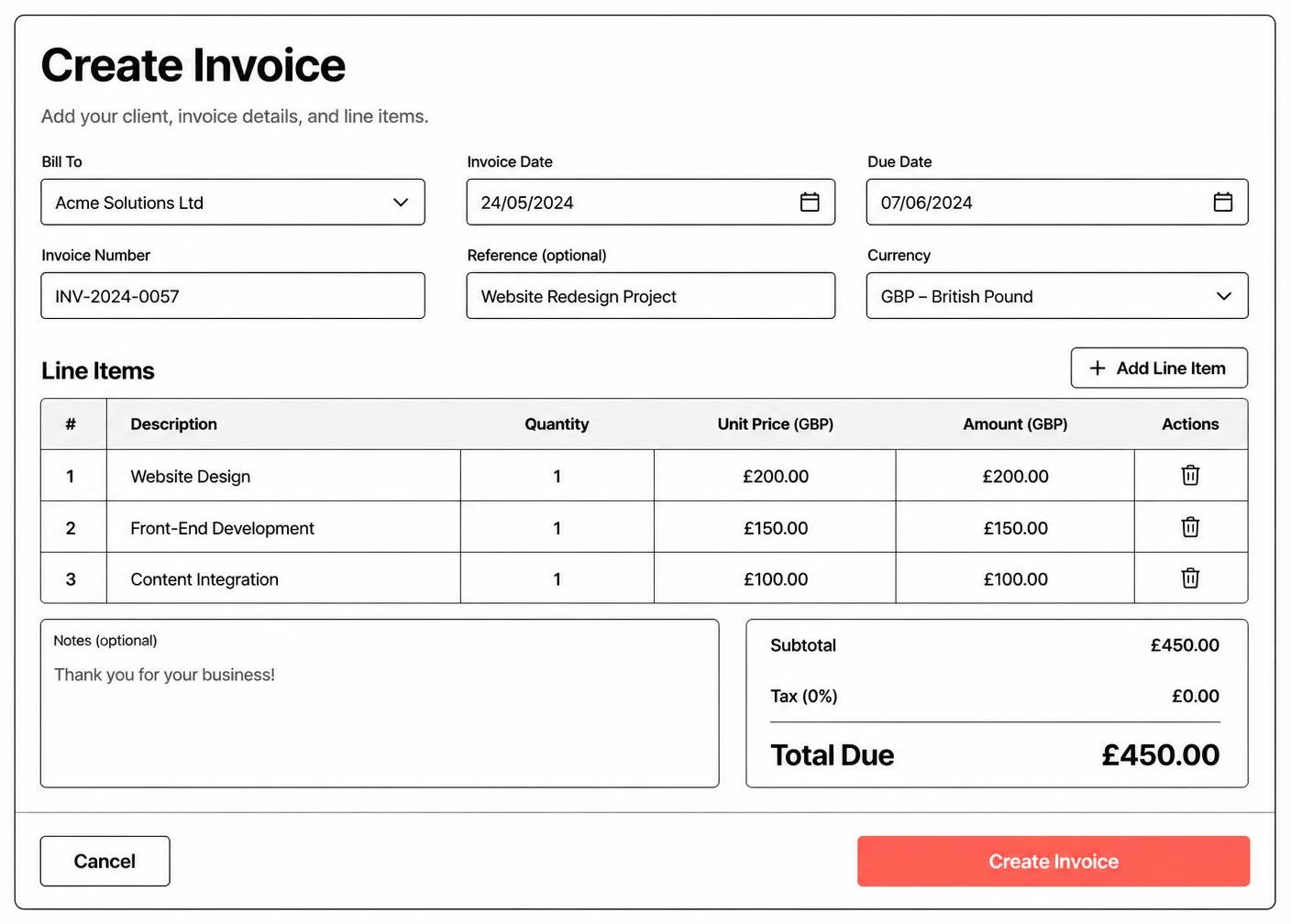
A plain sequence such as INV-1001, INV-1002 is easy to check, easy to explain and hard to duplicate. Clever formats that encode client codes and dates tend to break the first time something unusual happens.
If an invoice is cancelled, mark it cancelled and move on. Reusing the reference creates two documents with one identity, which is exactly the confusion numbering exists to prevent.
Beginning at 1001 rather than 1 avoids awkward renumbering and keeps the reference a consistent length in lists and exports.
Changing format mid-year makes history harder to sort. If you must change, change at the start of a new financial year and note the change in your records.
A visible cancelled status with a short reason is better documentation than a deleted record, both for you and for anyone reviewing your books.
Invoicing becomes easier when the structure around it is predictable. InvoiceHarbour Cloud provides that structure: a place for customers, invoice records, service items, due dates and payment notes. It organises the information; the commercial decisions remain yours.
This article is general information about business administration. It is not accounting, tax or legal advice.
A simple structure for invoice records that stays readable a year later.
Draft, sent, due, paid, overdue: what each status should actually mean.
Clear terms recorded in the right place prevent most billing disputes.
Compare the six InvoiceHarbour Cloud packages and choose the record capacity, workflow features and setup support that match how you invoice.