How to Organise Invoice Records Properly
A simple structure for invoice records that stays readable a year later.
Invoicing software · One-time packages · Digital delivery
Draft, sent, due, paid, overdue: what each status should actually mean.
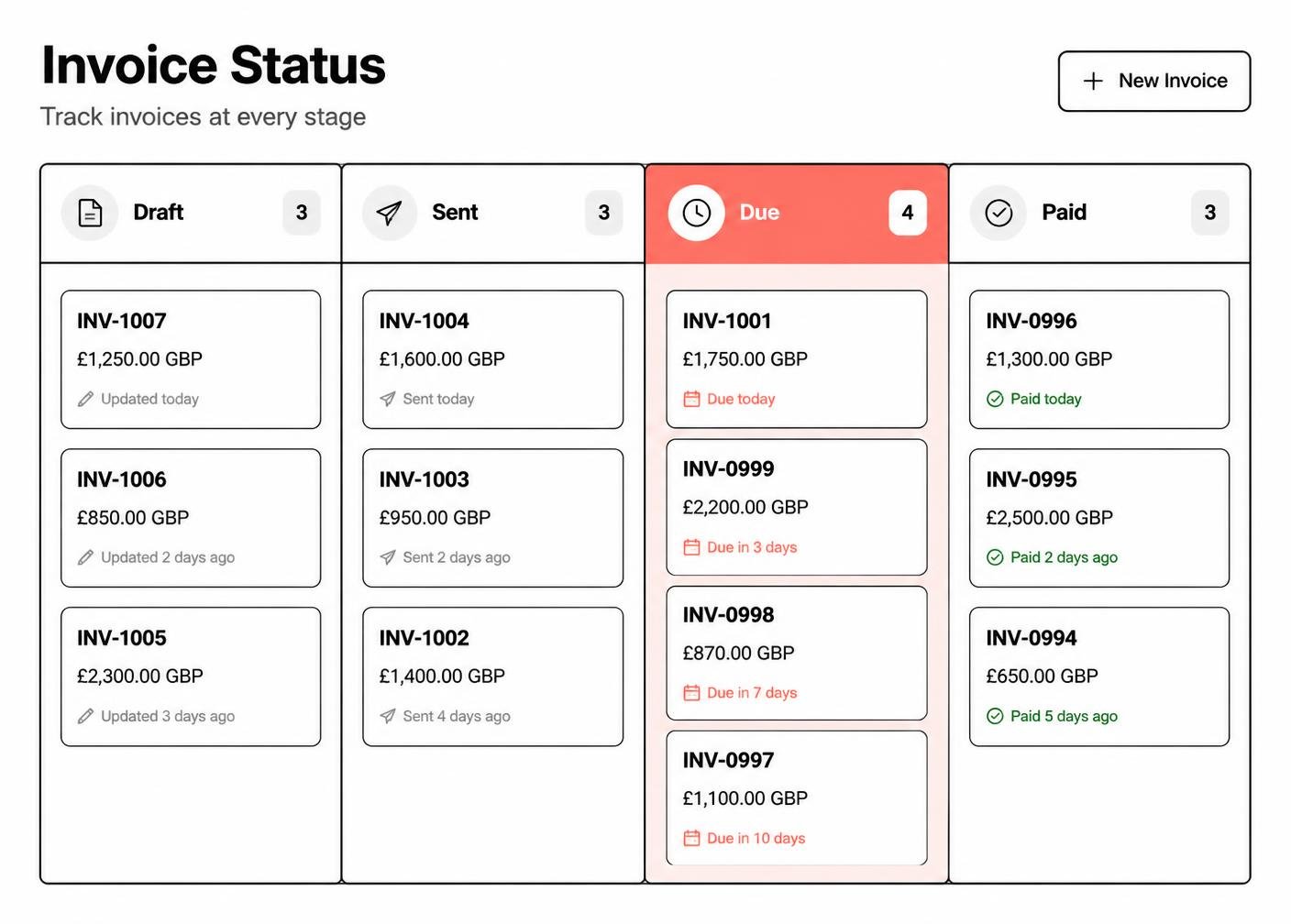
Write a one-line definition for every status you use and stick to it. Most confusion in billing records comes from two people interpreting sent differently.
Draft, sent, due, paid, overdue, cancelled and archived cover almost every real situation. Additional statuses usually describe a note, not a stage.
A status is only useful if it is current. Updating a record when something happens is quicker than reconstructing the truth at month end.
Overdue simply means the agreed date has passed. Treat it as a reminder to send a polite follow-up, and record what you sent.
Archiving closes the loop. Records that are settled and archived stop competing for attention with work that still needs it.
Invoicing becomes easier when the structure around it is predictable. InvoiceHarbour Cloud provides that structure: a place for customers, invoice records, service items, due dates and payment notes. It organises the information; the commercial decisions remain yours.
This article is general information about business administration. It is not accounting, tax or legal advice.
A simple structure for invoice records that stays readable a year later.
Why a boring, sequential reference format is the most useful decision you will make.
Clear terms recorded in the right place prevent most billing disputes.
Compare the six InvoiceHarbour Cloud packages and choose the record capacity, workflow features and setup support that match how you invoice.