How to Organise Invoice Records Properly
A simple structure for invoice records that stays readable a year later.
Invoicing software · One-time packages · Digital delivery
Reusable service records make invoices faster and more consistent.
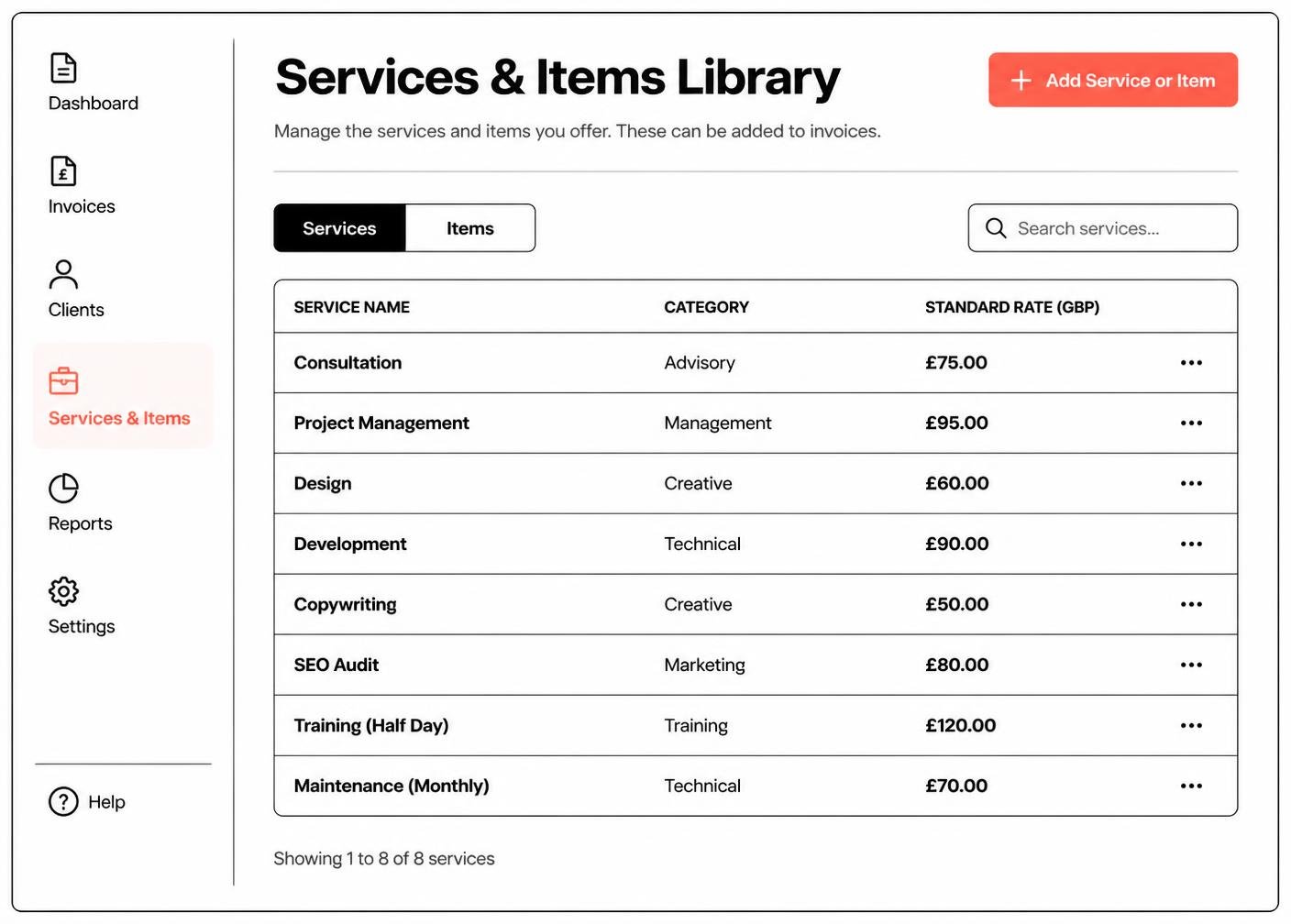
Most independent businesses sell six to ten distinct things. Writing them down usually reveals two that are quietly unprofitable.
Clients query vague descriptions. A specific line item is understood immediately and is far less likely to be disputed.
A standard amount is a starting point, not a rule. Having it recorded means every quote begins from the same place.
Categories make summaries useful: you can see which type of work is generating the most invoice value.
A fixed annual review is easier than deciding case by case whether it is time to raise a rate.
Invoicing becomes easier when the structure around it is predictable. InvoiceHarbour Cloud provides that structure: a place for customers, invoice records, service items, due dates and payment notes. It organises the information; the commercial decisions remain yours.
This article is general information about business administration. It is not accounting, tax or legal advice.
A simple structure for invoice records that stays readable a year later.
Why a boring, sequential reference format is the most useful decision you will make.
Draft, sent, due, paid, overdue: what each status should actually mean.
Compare the six InvoiceHarbour Cloud packages and choose the record capacity, workflow features and setup support that match how you invoice.